

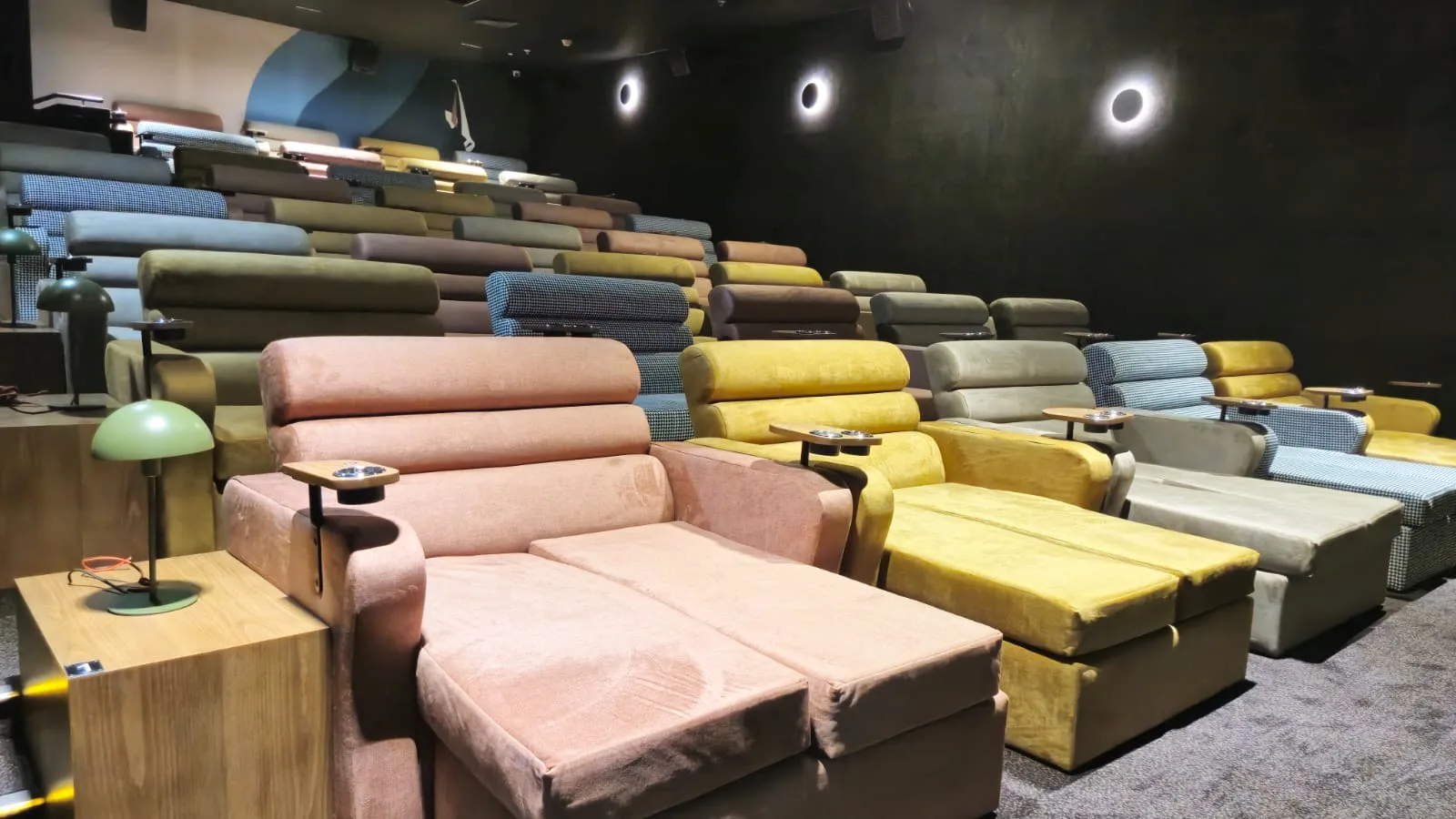
Seating That Shapes the Cinema Experience
Cinema spaces are designed to control attention. Lighting, acoustics, screen placement, and seating all work together to create an immersive environment where the audience disconnects from the outside world. Among these elements, cinema seating has the most continuous physical interaction with the viewer, making it a decisive factor in how the experience is perceived.
Cinema seating is not defined by appearance alone. It is defined by how effectively it supports the body, maintains focus, and performs consistently throughout thousands of screenings.
Cinema Seating as a Physical Interface
Once the viewer is seated, the chair becomes the primary physical interface with the cinema environment. For the entire duration of the film, posture, comfort, and stillness depend on seating performance.
Effective cinema seating supports
Natural and stable sitting posture
Reduced awareness of physical discomfort
A sense of personal space within shared rows
When this interface functions correctly, the audience remains focused on the screen rather than their body.
Supporting Attention Over Time
Cinema seating must perform for the full duration of a film without encouraging constant movement or fatigue. This is especially critical for longer formats where sustained attention is essential.
Seating designed for focused viewing emphasizes
Balanced back support
Proper seat depth to prevent pressure points
Controlled seating angles that limit strain
The objective is not luxury, but uninterrupted concentration.
Seating and Cinema Layout Logic
Seating plays a structural role in how a cinema operates. Row spacing, alignment, and aisle positioning all depend on seating dimensions and behavior.
Well planned cinema seating layouts contribute to
Clear sightlines from every seat
Orderly audience circulation
Efficient use of theatre capacity
Seating becomes part of the architectural logic rather than an afterthought.
Acoustic Sensitivity of Seating Systems
Sound is a defining element of the cinema experience. Seating must remain acoustically neutral and mechanically silent to avoid disrupting immersion.
Professional cinema seating is developed to
Avoid noise during sitting and movement
Remain stable without vibration
Support consistent acoustics across occupied and unoccupied seats
This acoustic discipline supports both dialogue clarity and sound design impact.
Durability in Commercial Cinema Use
Cinema seating is subject to continuous daily use. Durability is therefore not a secondary consideration but a core requirement.
Long lasting cinema seating systems rely on
Strong internal structures
Materials resistant to deformation
Construction methods that preserve alignment
Durability ensures stable performance across years of operation.
Visual Order and Theatre Atmosphere
Cinema seating occupies a large portion of the visual field within the theatre. Its form, repetition, and alignment influence how intentional and controlled the space feels.
Visually disciplined seating contributes to
A calm and organized environment
Reinforcement of architectural rhythm
Focus directed toward the screen
Visual restraint supports immersion rather than competing with it.
Adaptability to Different Cinema Concepts
Modern cinemas operate across various formats, including standard screenings, premium concepts, and special events. Seating systems must support these variations without compromising performance.
Adaptable cinema seating allows
Use across multiple theatre formats
Consistent comfort regardless of concept
Long term relevance as cinema models evolve
Adaptability is achieved through planning, not complexity.
Operational Efficiency and Maintenance
Cinema seating directly affects daily operations. Cleaning, inspection, and maintenance depend on how seating is designed and installed.
Well designed seating systems support
Efficient cleaning processes
Easy access for maintenance
Reduced downtime between screenings
Operational efficiency contributes to sustainable cinema management.
Seating as a Long Term Investment
Cinema seating is evaluated over long operational lifecycles. Decisions made during selection influence performance, comfort, and operating costs for years.
A long term seating strategy prioritizes
Consistent comfort over time
Structural reliability
Reduced need for replacement
Seating becomes a stable asset rather than a recurring concern.
The Invisible Success of Cinema Seating
The most effective cinema seating is rarely noticed. Its success lies in how quietly it supports the experience.
When seating performs correctly, it
Maintains audience focus
Eliminates physical distraction
Supports the cinematic atmosphere
Conclusion
Cinema seating is a foundational component of successful theatres. It shapes comfort, focus, acoustics, and operational performance while remaining visually and mechanically restrained.
When seating is designed as an integrated system rather than a standalone product, it becomes an invisible but essential contributor to immersive and reliable cinema experiences.
Created By : Simko Cinema Seating